The Optima Journal
The Optima Journal
Peptide science, explained simply. Explore the research, understand the terminology and see where the evidence ends.
The Optima Journal
BPC-157 research: what tendon experiments and a human knee-pain report can tell us
Read BPC-157 evidence in context: tendon-cell experiments, a rat injury model and a small human report answer different questions about the compound.
Read the articleThe Optima Journal
How long do research peptide pens remain stable? What the evidence needs to show
Why peptide pen shelf life needs evidence for the exact formulation and container—and why a single purity result cannot establish stability over time.
Read the articleThe Optima Journal
What do ipamorelin studies show? Hormone responses and clinical outcomes
Explore ipamorelin research in healthy volunteers, a rat model and a postoperative trial—and why a hormone response does not establish clinical benefit.
Read the articleThe Optima Journal
How to read a peptide Certificate of Analysis: identity, purity and content
What does a peptide COA actually show? Learn how identity, purity, content and batch details answer different questions about research materials.
Read the articlePeptide basics
What are peptide pens? A guide to pens, cartridges and vials
What does “prefilled” mean, what is inside a cartridge, and how do you read the label? A plain-English guide to peptide pens, with examples using glutathione and NAD+.
Read the article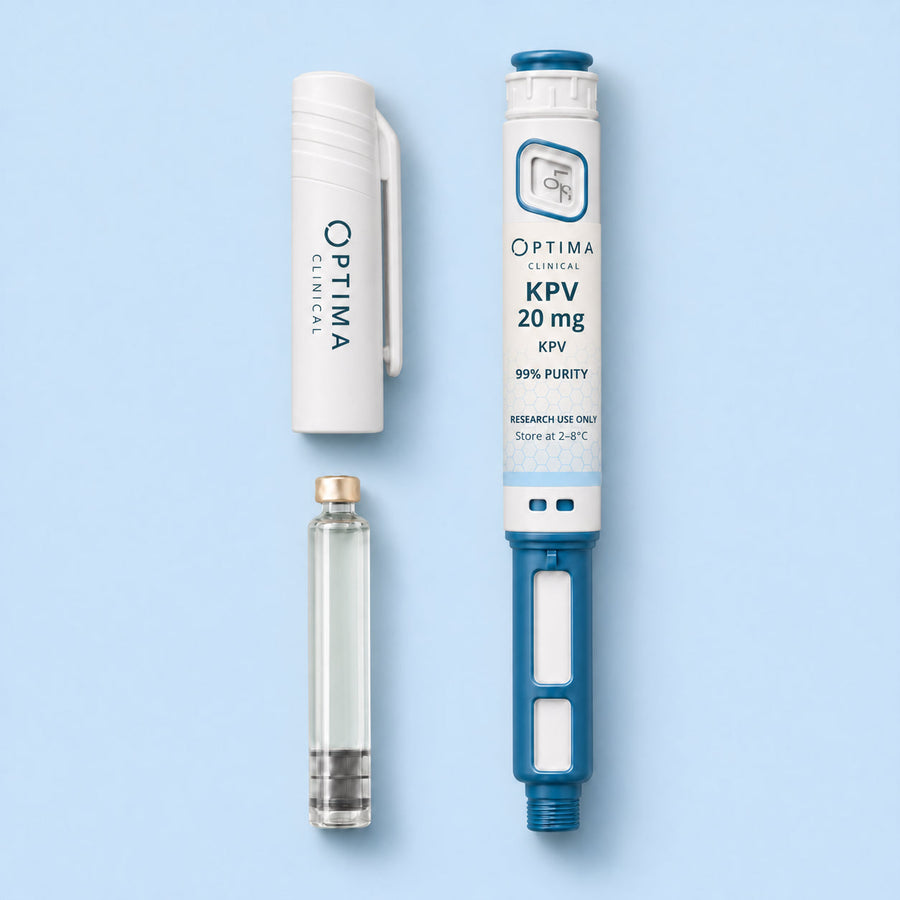
KPV research explained: cells, colitis models and why formulation matters
Explore KPV research in cells, mouse colitis models and human skin samples—and why formulation findings are not evidence of clinical benefit.
Read the article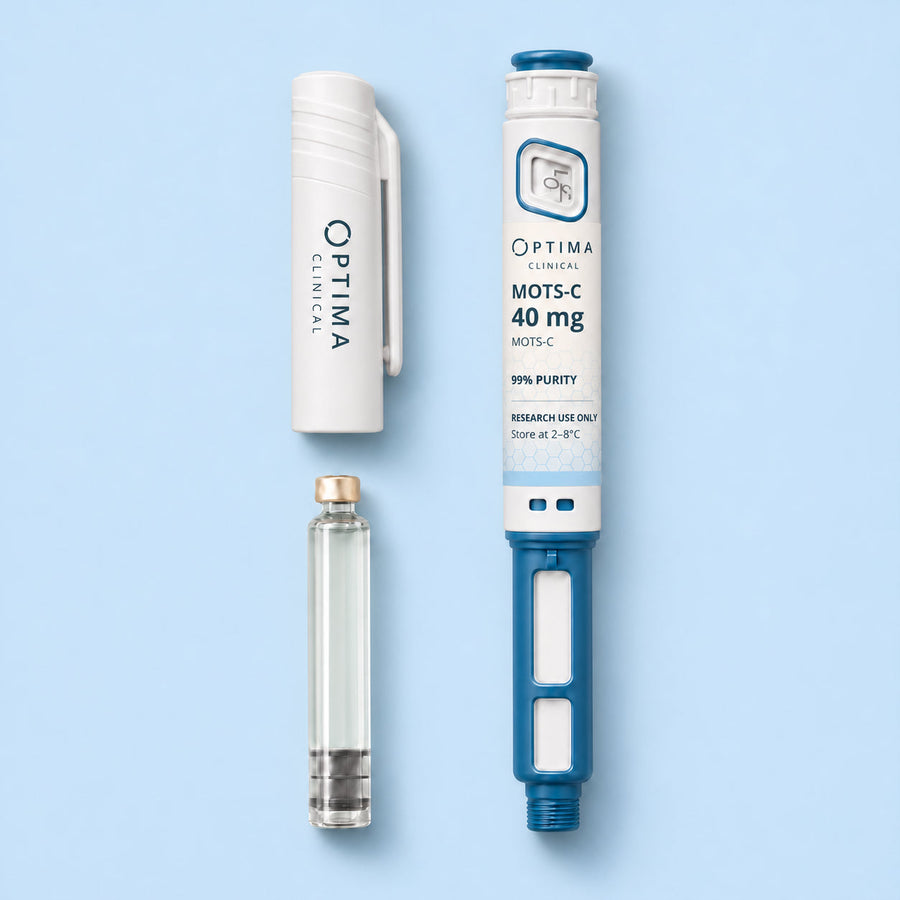
MOTS-c research explained: cells, mice and human exercise
What MOTS-c studies reveal about cell signalling, mouse experiments and human exercise—and why these findings do not establish product benefits.
Read the article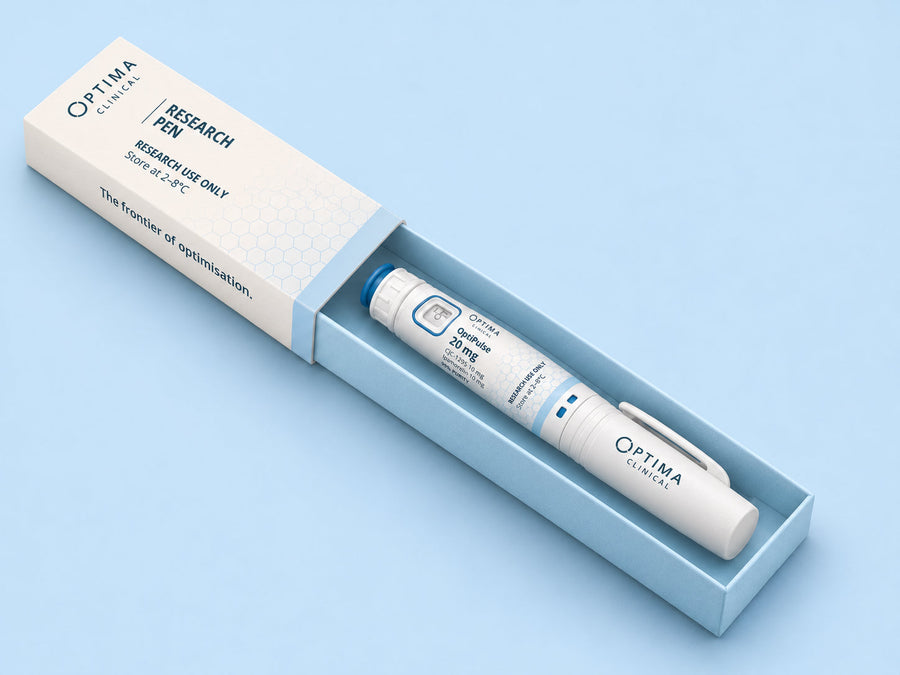
What are peptides? A plain-English guide
A simple guide to amino acids, peptides and proteins, with clear explanations of peptide pens, batch documentation and research evidence.
Read the article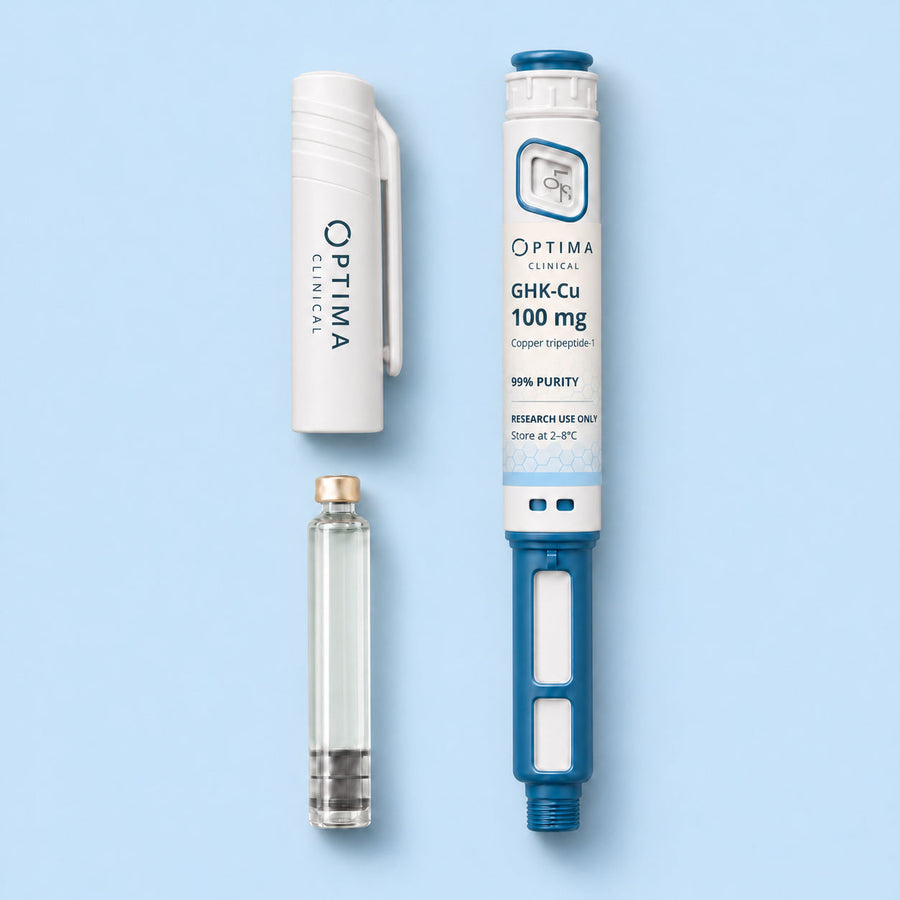
GHK-Cu explained: what copper peptide studies show
Explore what cell and animal studies show about GHK-Cu, why copper peptides interest researchers and what the findings do not establish.
Read the articleThe Optima Journal by email
Get a weekly digest of new research articles from Optima Clinical. Unsubscribe at any time.
Articles use AI-assisted drafting and link to their sources. Research findings are distinguished from evidence about product use.